Share

Henry Kissinger was born on 27 May 1923, in the shadow of the First World War. As a child, he witnessed the democratic exuberance of Weimar Germany and the terrible despair of Nazi tyranny. As a refugee, he became an American citizen in the U.S. Army, fighting to save civilization, as he and others understood it. Kissinger returned from war and quickly established himself as a leading proponent of American anti-communism, nuclear diplomacy, and great power negotiation in the Cold War. He is now, at 90 years of age, the world’s most recognized foreign policy “wise man.”


No other foreign policy expert commands more attention across societies and parties than Kissinger. He is an object of unmatched fascination, veneration, and condemnation. His life story is compelling, even for his detractors: a former refugee who climbed to the heights of the American government and then became an independent global diplomat moving seamlessly among the shifting leaders of the most powerful states. No other figure combines more than six decades of high level diplomatic experience with such a deep historical sensibility and an articulate understanding what he has seen. No one else has the consistent record of influencing and explaining foreign policy, amidst so much change, for so long. Kissinger is the living historical repository for the world’s twentieth century wisdom on the enduring dilemmas of foreign policy.


These dilemmas of foreign policy have defined Kissinger’s long career. As we reflect on his lasting policy influence, they are the appropriate place to start.

Enduring Foreign Policy Dilemmas

The first dilemma that Kissinger confronted, as early as the 1950s, was the question of how to use overwhelming capabilities for discrete ends. The most powerful weapons do not automatically translate into political leverage. Often the opposite is the case, because the damage from deploying total force hurts the most powerful actors, despite all of their advantages.


Kissinger’s earliest writings about policy criticized the Eisenhower-era doctrine of massive retaliation for failing to address the limits of overwhelming military power. Despite clear superiority in the number and sophistication of its nuclear capabilities, the United States was hamstrung, Kissinger argued, by a strategic posture that threatened full-scale nuclear warfare as the main American deterrent to limited communist aggression. When vital national interests were not immediately at stake, adversaries doubted American willingness to go nuclear. The Soviet and Chinese-supported North Korean invasion of South Korea in June 1950 proved this point. The communists recognized that the United States would not start a nuclear war to defend its ally, and the communists doubted that Washington would mobilize sufficient conventional capabilities to reverse the North Korean ground assault. On this latter point, North Korea’s gamble almost paid off. Kissinger and his contemporaries feared repetitions of the Korean War around Berlin, Taiwan, and Japan.


In the Council on Foreign Relations study that he famously summarized for his 1957 book, Nuclear Weapons and Foreign Policy, Kissinger called for a diverse range of American nuclear and non-nuclear military capabilities to provide a more vibrant and flexible deterrent against enemy aggression. The problem was that new military capabilities would widen the range of “limited wars” attracting American intervention. Capabilities create temptations, Kissinger understood. Fighting on the enemy’s terms, Washington would risk sending soldiers to more distant and difficult territories where the initial costs of engagement were low, but rose precipitously. That was the experience of both the Korean and Vietnam Wars, each of which Kissinger supported, but with frequent criticisms of Harry Truman and Lyndon Johnson’s limited escalation tactics. In both cases, Kissinger called simultaneously for wider threats to coerce the enemy (including nuclear threats) and more intensive efforts at negotiation. He implemented both of these approaches, with great controversy and mixed results, as Richard Nixon’s chief foreign policy aide. Striking the correct balance between overwhelming force and flexible capabilities has been a central area of analysis for Kissinger throughout his career, and it remains foundational to debates about contemporary counter-insurgency and war-fighting doctrine.


Kissinger’s reflections on military strategy underpinned the second foreign policy dilemma that has animated his career as a thinker and policy-maker: negotiating necessary compromises with enemies that do not reward bad behavior. The legacy of failed Nazi “appeasement” before the Second World War colored Kissinger’s fears of weakness, as it did for most of his contemporaries. Nonetheless, he was one of the most consistent critics of this frequently invoked analogy in the postwar decades.


Kissinger argues that negotiated compromises, even with “evil” enemies, are necessary for the successful conduct of foreign policy. He contends that effective diplomacy can turn strategic compromises into substantive contributions for the national interest. Even in times of war, Kissinger claims, effective leaders must combine the escalation of force with simultaneous efforts at negotiation. Force and diplomacy are not alternatives, but integrated elements of security. The role of the national leader, in these terms, is to manage the mix of force and diplomacy, finding the right moments to increase one and reduce the other. They never exist in isolation, despite our political rhetoric to the contrary.


Although he supported the main elements of American containment doctrine, Kissinger was also a trenchant detractor. As a scholar, a policy-maker, and a public commentator he has argued that U.S. leaders did not pursue opportunities for negotiation aggressively enough during the Cold War. In late 1945, at a time of maximum American advantage, and also in mid-1953, following Josef Stalin’s death, the United States was too passive, too reactive, and too uncreative according to Kissinger. He chastises Dean Acheson, John Foster Dulles, and others for failing to make concrete proposals to the Soviet Union and the People’s Republic of China that could have unfrozen divisions in Europe and Asia, and associated strategic tensions.


Kissinger followed this precise advice in the early 1970s. The opening to China was a vigorous and risky effort, prioritized by both Nixon and Kissinger, to negotiate new opportunities for American power amidst rising Sino-Soviet tensions and the debilitating quagmire in Vietnam. Through detente with Moscow, Nixon and Kissinger energetically worked to re-define the Cold War with new forms of summitry, arms control, non-aggression agreements, and even “basic principles” for peace. In the Middle East after the 1973 War, Kissinger used intensive “shuttle diplomacy” to orchestrate new deals among long-time adversaries in Cairo, Jerusalem, Amman, and even Damascus.


Kissinger (”Super K,” as some called him in the early 1970s) proved that the United States could gain great value from negotiating with adversaries in diverse regions. At the same time, his efforts at compromise inspired angry resistance from critics, particularly within the United States, who believed he was “selling out” American ideals and projecting weakness. His successes abroad created conditions for debilitating attacks at home from liberal humanitarians, like Jimmy Carter, and anti-communist hawks, like Ronald Reagan.


The political controversies surrounding the Nixon administration raise the third and most enduring dilemma from Kissinger’s long career: What is the legitimate role for executive power in U.S. policy-making? Kissinger has written more than anyone else for the public about foreign policy, and he spent many hours in office giving speeches and testifying before Congress. Nonetheless, he and Nixon worked very hard to insulate their deliberations and actions from immediate public accountability. They argued that managing delicate relations with adversaries, especially China, required secrecy to maximize speed and flexibility. They also believed that the American public was too ill-informed, impatient, and emotional to understand their carefully calibrated policy in Vietnam.


Kissinger’s skepticism about democratic constraints on executive authority, and his frustration with the extreme politicization of policy deliberations in the early 1970s, contributed to his extraordinary efforts to centralize power in the White House. He was not alone, however. Kissinger and his predecessors, McGeorge Bundy and Walt Rostow, tranformed the National Security Council from an inter-agency planning body, as it was used by Dwight Eisenhower, into a small policy-making shop closely controlled by the President. Nixon and Kissinger managed the details of American foreign policy through the NSC, often locking the State and Defense departments, as well as Congress, out of decision-making. Other presidents have done the same.


Kissinger contributed to a larger trend in the growth of American executive power, and a similar diminishment in public oversight for war-making, intelligence operations, and recent aerial drone attacks on alleged terrorists, including an American citizen. Kissinger has been one of the most eloquent and thoughtful writers about how and why national executives must exercise greater foreign policy freedom than traditionally envisioned in American governance. Kissinger has also been the target of lawyers, historians, and activists who wish to restrain the “imperial presidency” and strengthen various congressional, judicial, and even international limits on the power of the White House.


These three dilemmas of modern American foreign policy – matching overwhelming power to discrete ends, finding appropriate mechanisms for negotiating with adversaries, and determining the acceptable range of presidential authority – have animated Kissinger’s rise from refugee to global sage. More than any other figure, he has defined these problems and proposed solutions in writing and in practice. Since the early 1950s, his life has been an ongoing dialogue about how to deploy power, how to conduct diplomacy, and how to re-define democratic authority for a threatening world.

Enduring Insights

Kissinger does not offer a single coherent philosophy for policy-making. His long career captures some valuable insights that continue to attract the attention of powerful and ambitious actors. This is the wisdom he dispenses, and it is probably the set of topics that scholars, policy-makers, and citizens will continue to debate for the next half-century:


American power is good and it can be calibrated to effective purposes with the correct leadership. Kissinger uses his career as a case in point. He argues that during the Cold War the United States managed to improve the lives of its own citizens and many in other societies because figures like Harry Truman, Dean Acheson, Dwight Eisenhower, Richard Nixon, Ronald Reagan, and of course Kissinger, deployed the nation’s military, economic, and political capabilities to different parts of the world in the cause of defending free and peaceful societies. Kissinger admits to many exceptions, but he embodies the positive vision of what the Cold War was all about.


American leaders can conduct sophisticated and delicate diplomacy with diverse societies, securing the national interest through negotiation, compromise, and cooperation. Kissinger points to the creation of the North Atlantic Treaty Organization, détente with the Soviet Union, and the end of the Cold War as his primary evidence. Despite the popular tendency to seek quick and easy “solutions,” the United States managed complex relationships with a wide range of societies in the second-half of the twentieth century, often showing great willingness to accommodate the needs of allies, and even recognize the concerns of adversaries. American diplomacy had its share of failures, but it proved resilient, consistent, and largely effective when figures like Kissinger were at the helm. He reminds observers of the diplomatic capital the United States still commands.


Last, but not least, the American government can address big problems with mature leadership and bipartisan consensus. For all the controversies swirling around Kissinger, he remains a figure who can engage listeners on both sides of the political aisle in sophisticated policy discussions. He does not dumb things down and he does not pander to party. He writes long historical books about U.S. relations with China and he gives ponderous lectures about diplomacy and the national interest. Kissinger’s career points to the functional potential of the often chaotic and stagnant institutions that make up our system of government. Although he is quick to lament the challenges of democratic governance, Kissinger is also compelling in his example of how the messy workings of power can still produce bright light and big ideas.


After more than six decades deeply entangled in wars, coups, negotiations, and other foreign policy complexities, Kissinger is recognized less for the specifics of his policies than for what he represents. He is the living embodiment of what it means to be a modern foreign policy expert. He, of course, calls himself a “statesman.” With all the positive and negative associations that come with that word, we still have a lot to learn by studying Kissinger’s long career and what it means for the next ninety years.


This blog post originally appeared at http://globalbrief.ca

Share

The United States is the most technologically sophisticated society on the globe. The United States is also rapidly becoming a “third world” country. Our infrastructure is crumbling. For public transportation, basic infrastructure is often non-existent, even in major cities. Our schools are under-performing on most measures, our teachers are poorly trained, and local educational resources are getting cut to the bare bones. Most startling, American politicians have become so polarized that they seem more intent on waging jihad rather than making necessary deals with their congressional adversaries.


Washington is currently dominated by tribes, not enlightened representatives, that rule by tabu. You cannot even acknowledge that some new taxes are appropriate, if you are a Republican. You must not agree that entitlement spending requires some limits, if you are a Democrat. This is not governance. It is guerilla warfare.


The effect is what has just begun on March 1: sequestration. Since Congress could not agree on a mix of new taxes and new entitlement cuts, the United States will begin to implement across-the-board spending cuts divided evenly between domestic and military appropriations. The cuts will total $984 billion, and they are immediate.


This is a textbook example of how NOT to govern. The members of Congress are not talking across parties. They are not working hard for a deal to manage this new economic environment. They are sitting back, pretending the cuts are not as damaging as they are, and encouraging everyone to get on with their lives – to “go shopping,” as a previous president put it.


The general political nonchalance about the sequester stands in start contrast to the communities with large numbers of military support personnel who will face deep pay cuts, as well as students and small businesses who will not get promised loans. The sequester hurts most in bringing all government work to a standstill. Under sequester, you cannot hire new people, you cannot invest in valuable new programs, and you cannot think ahead. The U.S. government has placed its advanced society into a bickering and backward headlock.


What should we expect? A few more weeks of public apathy toward the sequester, followed by a quick increase in public outrage when the sequester cuts start to hurt badly.


What should we do? That is a very hard question to answer. Our elected leaders cower before their most extreme supporters, and they discredit all routes to necessary compromise. They repeatedly show poor judgment.


The sequester standoff will only end when citizens demand not just a deal, but a renewed commitment to bipartisan efforts at budgeting. Citizens must make it clear to members of Congress that present behavior is unacceptable. Voters must withhold their votes from the many destructive personalities at the Capitol.


I dream today of a sequester-inspired movement of politically engaged young people. New leaders less entrapped in the inherited commitments of established politicians can act in more cooperative ways. A sequester-inspired movement will not necessarily create street barricades. Instead, I envision a new movement following our standoff as the public searches for the very dynamism it presently lacks. It is time to say “enough” (!) to elected leaders, Democrats and Republicans, and make bipartisan fiscal cooperation a new organizing principle for our fragmented and antagonistic political system.


Policy is about personnel. We need better personnel in government. The frustration of the sequester should motivate all of us to force a change in the federal government’s mode of operation. To govern is to work with others, friends and enemies. To be a good citizen is to demand much more courage and foresight than we are getting from the people elected to serve our needs. The standoff of the sequester shows it is time for all Americans to stand up and demand more.


This blog post originally appeared at http://globalbrief.ca

Featured Book
Liberty's Surest Guardian

Liberty's Surest Guardian: American Nation-building from the Founders to Obama (Free Press/Simon & Schuster, Fall 2011)

Americans are a nation-building people, and in Liberty’s Surest Guardian, Jeremi Suri looks to America’s history to see both what it has to offer to failed states around the world and what it should avoid.

More at the book website >

About Jeremi Suri
twitter facebook rss feed

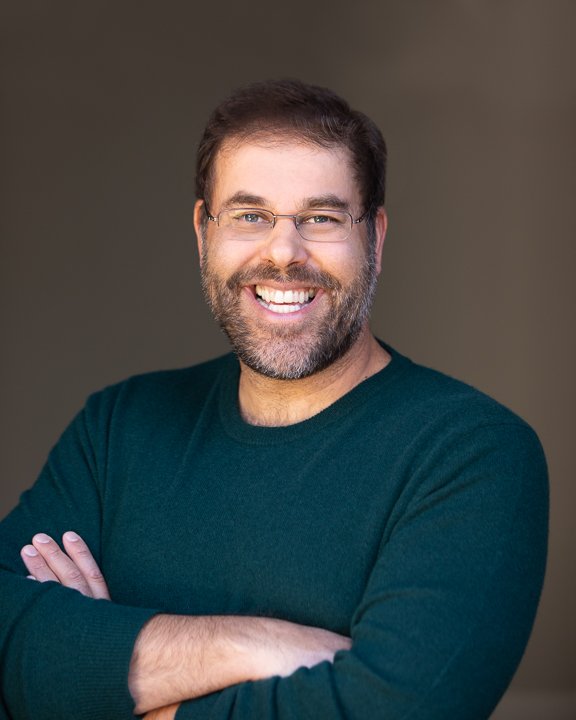
Jeremi Suri holds the Mack Brown Distinguished Chair for Leadership in Global Affairs at the University of Texas at Austin. He is a professor in the University's Department of History and the Lyndon B. Johnson School of Public Affairs. Professor Suri is the author of five books on contemporary politics and foreign policy. In September 2011 he published a new book on the past and future of nation-building: Liberty's Surest Guardian: American Nation-Building from the Founders to Obama. Professor Suri's research and teaching have received numerous prizes. In 2007 Smithsonian Magazine named him one of America's "Top Young Innovators" in the Arts and Sciences. His writings appear widely in blogs and print media. Professor Suri is also a frequent public lecturer and guest on radio and television programs.

Categories